On Tuesday, November 8th, voters in Assembly District 103 chose Sarahana Shrestha as their Assembly member. This was the culmination of a people-powered upstart campaign that began over a year ago, a victory that many said was impossible. After defeating a 25-year incumbent in this June’s Democratic primary, Shrestha beat back a right-wing Republican challenge to secure her position as the first socialist in history to be elected to the New York State Legislature from outside New York City.
This campaign was run on the Democratic ballot line, but it was not a Democratic campaign. This campaign was helped by our progressive allies, but it was not merely a progressive campaign. This was a socialist campaign with a socialist candidate, a socialist platform, and socialist volunteers.
Shrestha is a DSA member and the Co-Chair of the Ecosocialism Working Group for this local Mid-Hudson Valley chapter. Leadership positions in the campaign were all filled with DSA members new and old. Dozens of DSA members volunteered as phonebankers and canvassers, helping the campaign make over 200,000 calls and knock on over 43,000 doors.

This win builds on Mid-Hudson Valley DSA’s electoral victories in 2021, when the chapter elected five members in local elections across Dutchess, Orange, and Ulster Counties. Notably, DSA member Phil Erner toppled David Donaldson, the Chairman of the Ulster County Legislature and a 28-year incumbent. Twice, in a little over a year, Mid-Hudson Valley DSA has defeated the Democratic establishment and Republican opposition.
Shrestha will serve alongside her DSA slatemates from New York City. Together they will be part of the historic Socialists in Office committee which represents a shared commitment to legislation that improves the lives of working class people. They will act collectively to wield power together. They will fight for the New York Health Act, Good Cause Eviction, the Tenant Opportunity to Purchase Act, the Build Public Renewables Act, the Clean Slate Act, the New York For All Act, expanding abortion rights, universal childcare, fully funding our public schools and universities, raising the minimum wage, taxing the rich, adding the right to strike to the New York State Constitution, and more.
For Mid-Hudson Valley DSA, Election Day was not the end, but just the beginning. We run elections because they can be an important way to build power, and to contest the influence of corporate money and the far right. But elected officials can never alone deliver the transformative change we need. Alongside our electeds, DSA works to build power in the streets and in workplaces to grow a mass movement that can take back power from the capitalist class and bring it back to working class people.
In this election cycle, many Democrats have chosen caution and moderation, ceding the narrative to a right-wing movement that whips up fear without providing real solutions to violence or social decay. Our victory proved that the people of Assembly District 103 were ready for a politics that speaks to hope over fear, one that demands the beautiful future the working people of the Hudson Valley and New York state deserve. Our momentum continues to grow as more of our friends and neighbors join the fight for a better world, and as democratic socialists, we will continue organizing and agitating to make that future a reality for all.

About MHVDSA:
We are a member-led and member-funded, democratic political and activist organization, but we are not a political party. While we recognize the importance of electoral politics, we know that the multiracial working mass movement we need won’t be built solely by electing better candidates, but by building power through labor organizing, mutual aid networks, tenant organizing, and much more. We fight for systemic change that empowers working people. Our chapter covers Dutchess, Orange, and Ulster Counties in Mid-Hudson Valley, New York.
Starting October 1, 2022, all Ulster County buses will be fare-free, as the result of a bill proposed by MHVDSA member and Ulster County legislator Phil Erner. DSA members were essential to Phil’s winning campaign in 2021, which set the stage for Sarahana Shrestha’s victory earlier this year. Below is a message Phil sent to our recent discussion on “Transportation as a Human Right”:

Dear MHVDSA,
Please excuse that I am at session of the Ulster County Legislature and unable to join you in person tonight.
Congratulations to the people of Ulster County for having achieved a fare-free public transit system. And congratulations to you, MHVDSA, for having helped to propel my election into the Legislature, so that I could advocate for this policy. As you’ve probably heard, beginning Saturday, Oct. 1, all Ulster County buses will cost the public nothing to board (or to exit—no “Charlie on the MTA” here)!
I’d like to explain how we won this victory by organizing and by politicking for eco-socialism and mobility justice in Ulster County, as well as to suggest how Orange and Dutchess counties might likewise make their transit systems fare-free; just last weekend I learned that Dutchess has begun looking into it. And what we might do next for public transit in our region.
In 2019 I co-founded the public advocacy group Friends of Kingston Public Transit Riders. Ulster County Area Transit (UCAT) was preparing to absorb Kingston’s Citibus system, and we began inquiring about making all Ulster County buses free. UCAT told us repeatedly that we could not do it without sacrificing state & federal aid, which covered a majority of funding the system; in other words, we could not afford to do it. But in fact the new Kingston routes had started out free following the consolidation, and in part due to our advocacy they remained free into 2020, when COVID hit.
The first two years of the pandemic were a total disaster for public transit workers and riders alike. Our Kingston riders group more or less disbanded, turning to volunteer for what seemed more critical, emergent needs: from health care to food relief to housing eviction defense to police accountability.
As we began to emerge from that wreckage around New Year’s 2021-22, however, the riders group got re-constituted. Meanwhile thanks in great part to your MHVDSA canvassing efforts in 2021, I had gotten elected into the Ulster County Legislature. Now we had both a revived public advocacy group and a couple of legislators meeting with UCAT and deputy executives.
With the public showing up to testify a few more legislators became interested, and we got the county executive to do research. Our persistence paid off: we learned that while New York State public transit systems must contribute to the state a minimum fare of 30 cents per regular rider, and 15 cents for riders from ‘reduced fare’ categories, the state then returns aid to the transit systems at triple those rates. That is, for each dollar we send to Albany in transit “fares,” from whatever source, we get three dollars back. And so the more riders we have, the more money we get. In other words, the state provides incentives to increase ridership. And the Federal Transportation Administration, whose permission transit systems need in order to permanently eliminate fares, won’t penalize a system that somehow covers the fares. In short, rather than riders paying the fares, the county would sponsor them.
The transit riders group—which has since renamed itself Riders of Ulster Transit Alliance “RUTA” while gaining members—continued advocating at county meetings and elsewhere, while newspapers began reporting about the discussion in committee meetings. We made clear that this free fares were a priority among riders and the general public. And we further argued how getting more folks riding the bus could save fuel and maintenance & repair costs for private vehicles; reduce wear & tear on roadways; and decrease roadway violence with less traffic and better trained drivers. Besides enabling those without money to ride, it could entice those who had a choice to leave their cars at home.
The Legislature’s earlier passage of a temporary reduction on motor-fuel taxes, promoted as “inflation relief,” may also have helped to convince some legislators in the Democratic caucus as well as the executive branch that equity demanded that relief go to bus riders too.
When the fare-elimination resolution was about ready for passage, the Republican caucus made a counter-proposal which would have had free fares last only one year. Democrats rejected that change, and the resolution passed along party lines. But I learned that everyone shared much of RUTA’s frustrations with the UCAT system: from inefficiencies with large buses running empty on fixed routes while vast swaths of the county had unreliable, infrequent or no service, to long-standing communication difficulties between UCAT and the public.
In a way eliminating fares was an easy first step to take. To make the system more comprehensive and responsive we will need to address the nationwide bus-driver shortage, a symptom of among other things continued disgraceful working conditions. At UCAT for example a new driver’s wage starts at about $20 an hour, below most other local bus companies.
In Tompkins County, N.Y., which like Ulster has a small central city mostly surrounded by vast rural areas—also where Cornell University finances much of the busing in the city of Ithaca—they have begun looking into how the public might ride school buses to rural schools where they’d transfer to public buses. Let’s bring that practice to the Mid-Hudson Valley!
I encourage MHVDSA members advocating for better transit to consider joining RUTA if in Ulster County; or to join or begin a similar effort in your county. A further, regional approach could serve us because much funding divvied up by federal and state governments crosses county lines via Metropolitan Planning Organizations (MPOs) and Transportation Councils (TC).
Also the public may attend the Ulster County Legislature’s monthly Transportation discussion, taking place at the end of the Public Works committee meeting, usually the 2nd Monday night each month. But good luck taking transit home from Kingston after an evening meeting; most bus routes don’t travel that late. Rectifying that is a next goal.
I’d also like to respect MHVDSA chapter members who have joined the RUTA group and who spoke in favor of the free bus fare resolution at public comment during session of County Legislature last month.
Finally, a vision for Transportation: pay for transit workers doubles in short order, and they become respected as green workers. Frequent, fare-free public transit goes everywhere, everywhen. State runs buses on all its roads and bridges; counties run shuttles, vans and car-shares on theirs. Public transportation investment goes 90 percent or more toward the present mobility underclass such as bus riders and infrastructure prioritizing safety for vulnerable road users such as wheelchairs, pedestrians, bicycles, youth and elders. Private cars, trucks and freight trains stop for all other users and go last; freight de-carbonizes, powers down and becomes socialized. Car cooperatives replace most individual and private car ownership. Mobility elite reduce their jet-setting by at least 90 percent. Communities suffering present and historical mobility injustice further decide how this happens.
Thank you for listening, and for having a discussion on Transportation. I look forward to hear all about it!
Sincerely,
Phil Erner
KINGSTON, NY – On Tuesday, June 28th voters in Assembly District 103 chose Sarahana Shrestha as their Democratic nominee. In a district with a 2:1 Democratic enrollment advantage this virtually guarantees that Shrestha will be the first socialist in history elected to the New York State Legislature from outside New York City.
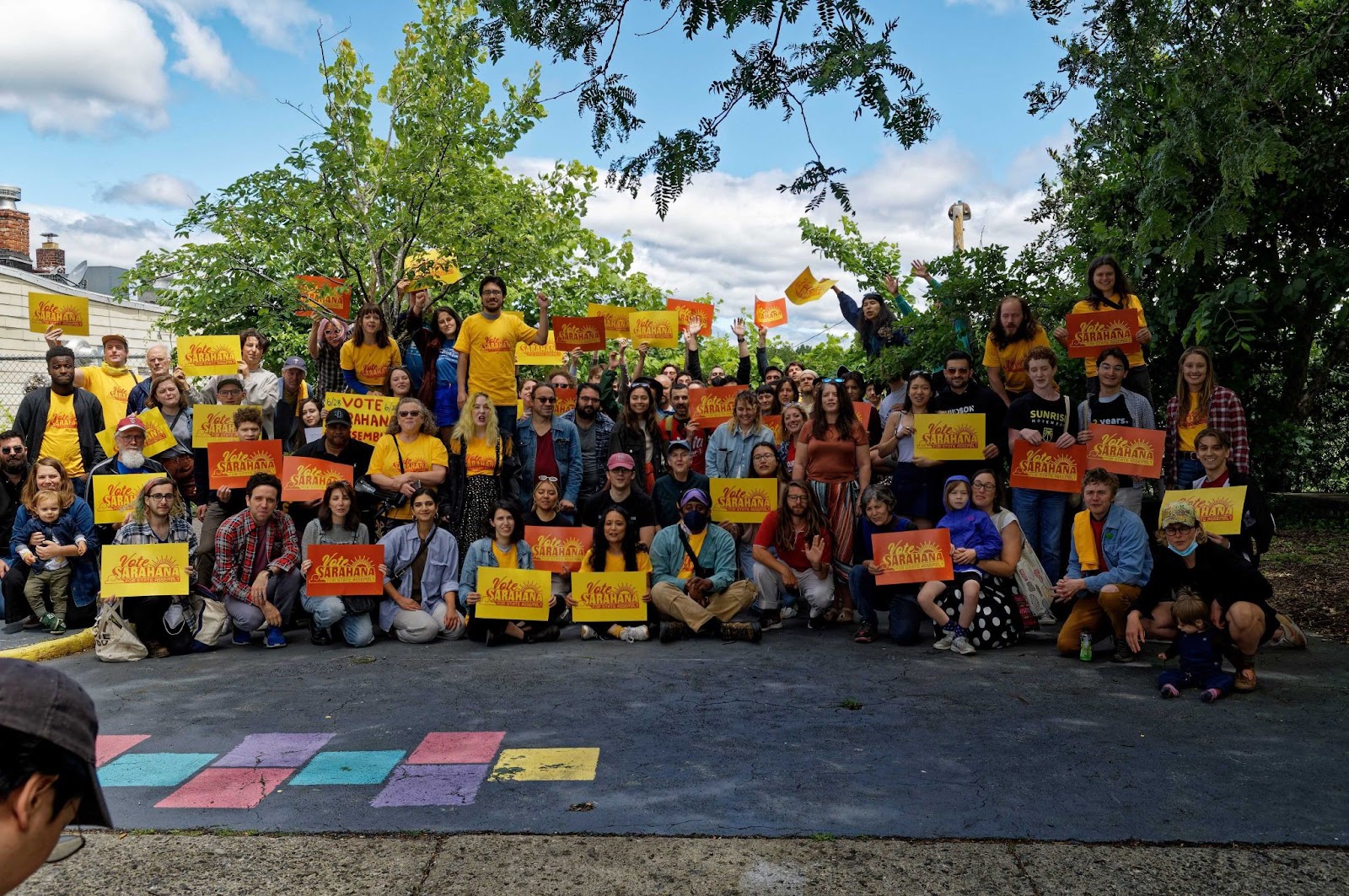
This was a DSA campaign from top to bottom, though we had help from progressive allies in the Hudson Valley like the Working Families Party and For the Many. Shrestha is a DSA member and the co-chair of the Ecosocialism Working Group for the local Mid-Hudson Valley chapter. Leadership positions of the campaign were all filled with DSA members. Dozens of DSA members volunteered as phonebankers and canvassers, helping the campaign knock on over 30,000 doors.
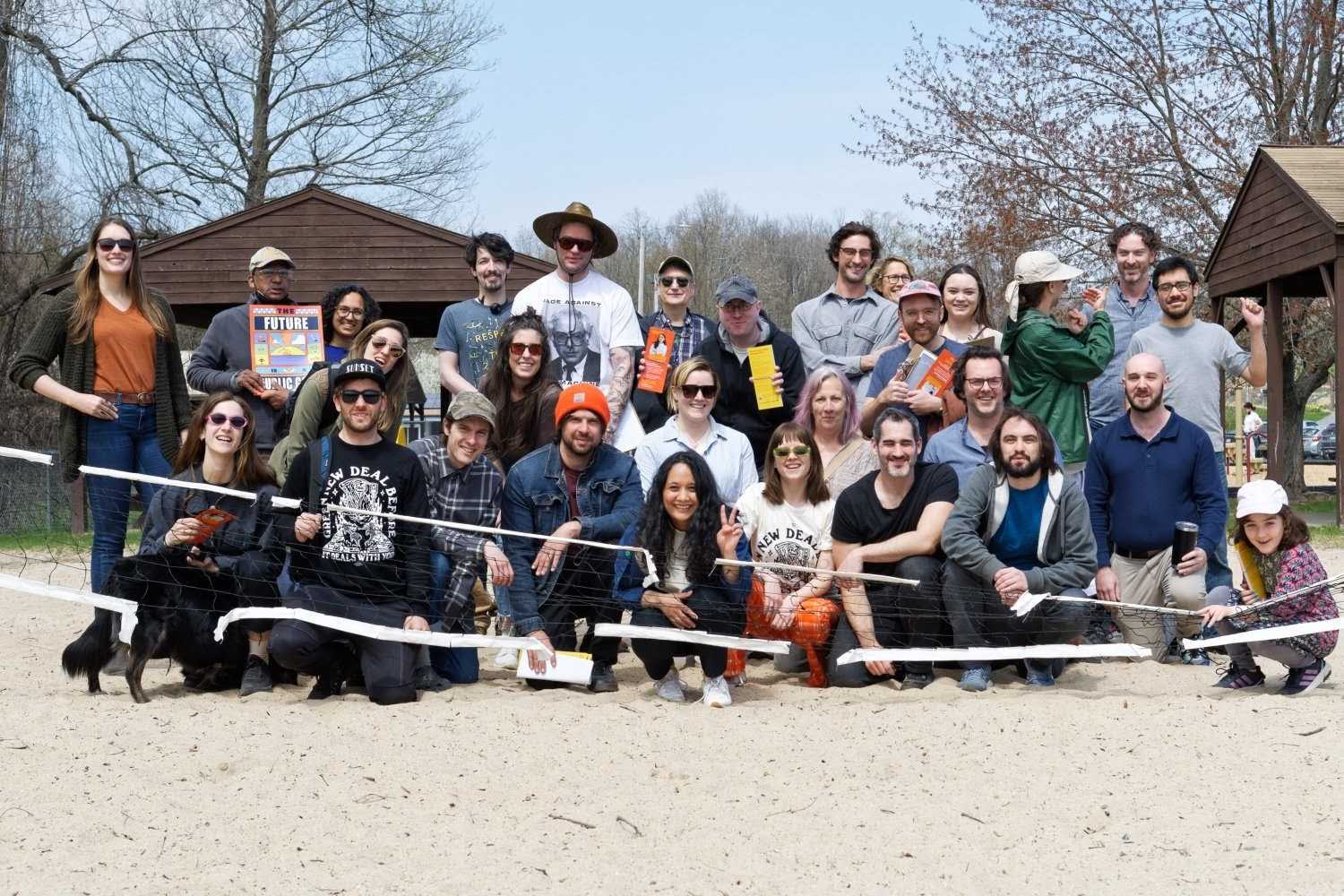
This win builds on Mid-Hudson Valley DSA’s electoral victories in 2021, when the chapter elected five endorsed candidates in local elections across Dutchess, Orange, and Ulster Counties: Phil Erner, Giselle Martinez, Megan Deichler, Dan Aymar-Blair, and Sarah Salem. Phil Erner, with DSA’s backing, toppled David Donaldson, the Chairman of the Ulster County Legislature and a 28-year incumbent. Twice, in a little over a year, Mid-Hudson Valley DSA has done what many had said was impossible.
We are confident Shrestha will be elected on November 8th, 2022. She will take office in January 2023 alongside her DSA slatemates. Together they will be part of the historic Socialists in Office committee which represents a shared commitment to socialist legislating. They will act collectively to wield power together. They will fight for the New York Health Act, Good Cause Eviction, the Build Public Renewables Act, expanding abortion rights, and fully funding our public schools and universities.
Kevin Cahill first took office in 1993. He went years without a serious primary challenge. When we started this race, self-appointed political experts told us it was impossible. They said he was a progressive because he cosponsored a few good bills (even while he took money from the special interests working to kill those bills). The voters were smarter than that. Housing, healthcare, education, and energy are human rights. A seat in the Assembly is not.
Recent events have shown that “vote blue, no matter who” isn’t enough to address the crises we face. There is a substantial difference between an elected official who pays lip service to progressive principles while taking corporate donations, and one like Shrestha who will actually organize to make those principles into policy reality. Corporate Democratic politicians are now on notice. If you ignore the material needs of your constituents, we will come for your seat.
About MHVDSA:
We are a member-led and member-funded, democratic political and activist organization, but we are not a political party. While we recognize the importance of electoral politics, we know that the multiracial working mass movement we need won’t be built solely by electing better candidates, but by building power through labor organizing, mutual aid networks, tenant organizing, and much more. We fight for systemic change that empowers working people. Our chapter covers Dutchess, Orange, and Ulster Counties in Mid-Hudson Valley, New York.
Subscribe
